
İstanbul,
20°C
kapalı



Procurement specifications for public rail systems are not bureaucratic attachments; they are the state’s binding guarantee of safety, performance, and technological sovereignty. Replacing rigorous modern standards with copy-paste templates compromises public safety and creates long-term financial liabilities.
Turkey is entering the most significant era of progress and expansion in its rail systems history. The 2053 Transportation and Logistics Master Plan aims to expand the total railway network to 28,590 kilometers, incorporating a massive expansion of high-speed and fast train networks. The projected demand for thousands of vehicles by 2035—combined with construction, electromechanical infrastructure, and signaling—presents a €38–40 billion window of opportunity. This marks a historic threshold for both domestic and global industries.
In a program of this magnitude, the core question is no longer “Are we procurement-ready for trains, rolling stock, or electric buses?” The real question is: Under what standards are we acquiring these complex, deeply integrated vehicles, lines, signaling networks, and maintenance operations?
Standard railway procurement specifications are not mere technical appendices to a tender file. A specification is the state’s formal promise of safety, performance, quality, and service to its citizens.
Conscience Cannot Be Copied
Too many specifications still rely on legacy tender text—documents inherited from earlier procurements that no longer reflect current technologies or emerging risks. This is not a superficial matter of formatting. An incomplete standard translates directly to deficient testing, compromised certification, inadequate maintenance, weak cyber resilience, and a fractured chain of accountability. The specification represents the conscience, the intellect, and the muscle of a project; it cannot be copied.
Standards such as EN 15085-2:2020+A2:2025 for welded manufacturing, EN 17976 for bolted connection integrity, CLC/TS 50701 for railway-specific cybersecurity, IEC 62443 for industrial control systems, EN 50126, EN 50129, EN 50716, and EN 50159 for safety and software lifecycles, and EN 17460 for structural bonding are not cryptic acronyms reserved for engineers. They define the underlying logic with which a rail system is designed, the discipline under which it is manufactured, and the independent scrutiny through which it is verified.
The issue is stark. While this rigorous standard language is a non-negotiable component of contracts and acceptance processes for rolling stock operating within the European Union, in many of the specifications we have examined these requirements are either unmentioned or not tied to clear, current, and verifiable delivery conditions. That gap creates a dual-class passenger reality. On one hand, you have passengers transported under fully defined, stringent standards; on the other, passengers carried on the mere hope that systems will prove “suitable.”
Neither the citizens of the Republic of Turkey nor those of any other nation belong in a second-class passenger category.
The objective of this analysis is not to target specific institutions or corporations; rather, it is to highlight a systemic and structural vulnerability. Flawed specifications stifle excellent engineering. Incomplete frameworks push well-intentioned public officials, industrialists, and suppliers onto treacherous ground. When deliverables, verification methods, and liabilities during malfunctions are left ambiguous from the outset, failure is inevitable. Throughout my nearly 30 years of experience in rail systems commerce, tendering, contracts, and project execution, I have learned one absolute truth: every standard omitted from a specification returns to the field as a missing layer of safety.
Human Factors: The Invisible Engineering
In early May, I consulted with Dr. Eylem Thron, a leading Human Factors expert and a prominent female leader in the sector. Operating as a Principal Human Factors Consultant in London, her insights were invaluable, and this section is interpreted in light of our strategic discussions. Modern Human Factors practice recognises that railway safety depends not only on engineering systems, but on how humans interact with them under normal, degraded, and emergency conditions. Railway safety extends far beyond braking distances, signaling margins, welding quality, or software certifications.
At the absolute core of these integrated networks is the human element: the train driver, traffic controller, signaling officer, maintenance technician, emergency response team, passengers, and operators. In Turkey, the “human factor” is routinely oversimplified, reduced merely to cabin ergonomics, training manuals, or baseline operating instructions. In contrast, modern railway engineering treats Human Factors as a rigorous discipline spanning the entire system lifecycle—from conceptual design to operational scenarios, signaling workload assessments, driver attention management, maintenance error probabilities, and even the prevention of operators misidentifying a cyberattack as a routine technical fault.
Terminology Note: A nuanced divergence in jargon and perspective exists between Continental Europe and the United Kingdom. In the UK, this domain is primarily designated as Human Factors, whereas the Continental European rail sector increasingly adopts the term Human and Organisational Factors (HOF). The rationale behind HOF is entirely sound: systemic safety is shaped not just by isolated individual behavior, but by organizational architecture, institutional culture, leadership paradigms, and workflow structures. In short, the problem is rarely “human error” alone; it is the design of the system within which the human operates.
This methodology becomes acutely critical in the era of high automation. Increased automation does not diminish human relevance; it fundamentally alters the human role. Much like my view on Artificial Intelligence, the operator intervenes less frequently but is confronted with vastly more complex, rapid, and high-stakes decisions when intervention is demanded.
This is known as the automation paradox: by making a system “smarter,” you risk leaving the human entirely isolated at the most critical moment of decision-making. This paradox introduces severe operational risks:
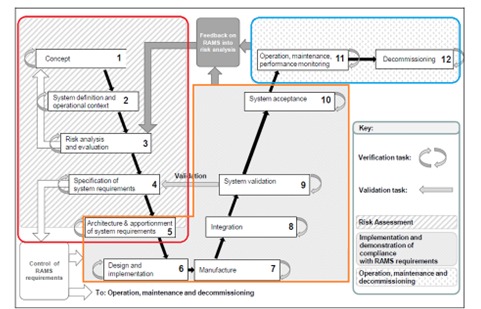
Consequently, Human Factors cannot be treated as a checkbox exercise to be “inspected” at the end of a project. It must be systematically integrated from day one through a structured, iterative process. Under the European railway standard EN 50126, Human Factors are a native component of the RAMS framework—Reliability, Availability, Maintainability, and Safety. However, this integration does not occur organically; converting human factors into engineering requirements and design decisions is a highly specialized technical discipline.
As the adoption of ETCS, ATO, digital signaling, and decision-support systems accelerates, the query is no longer “Do we have automation?” but rather “How will humans interface with this automation?” This is a profound operational philosophy issue that must be addressed immediately.
Key focus areas must explicitly include train driver and traffic controller workloads, skill fade under highly automated regimes, the misinterpretation of cyber incidents as technical glitches, and proactive training models such as Predictive Training Needs Analysis. These are no longer “optional best practices”; they are foundational requirements for sustainable safety. Human Factors must be explicitly defined in procurement specifications and translated into concrete technical clauses.
A rail specification lacking a dedicated Human Factors section defaults to treating humans purely as potential liabilities rather than conscious, adaptive components of the system. This perspective is fundamentally flawed. Properly engineered systems are built not to allocate blame to the human, but to empower the human to make the correct choice at the critical moment. Invisible engineering is almost always the most critical engineering.
Engineering Is Layered — Specifications Must Be Too
The disciplines discussed thus far—safety lifecycles, welding quality, human factors, and cybersecurity—cannot exist in isolated silos. On the track, they converge at a single, critical node: the interface where the operator interacts with the system.
A railway project must be conceptualized in distinct, overlapping layers. At the macro level sits the line network. Beneath it are the rolling stock, infrastructure, stations, signaling, control centers, and maintenance depots. Within the train itself lie the driver’s cab, passenger zones, and technical subsystems. Inside the cab sits the ETCS Driver-Machine Interface (DMI); inside the control center sits the traffic controller’s operational display.
Safety and Human Factors must be addressed uniquely across each distinct layer. A generic clause stating “A Human Factors plan shall be submitted” may superficially appear to cover the line, vehicle, cab, and interface levels simultaneously, but in reality, it defines none of them. The correct engineering approach requires distinct Human Factors deliverables, analyses, and validation activities tailored to each system layer. This applies equally to greenfield developments and modernization programs; classifying an asset as a “legacy system” does not absolve the operator of this obligation.
This exact layered architecture governs cybersecurity. Cybersecurity is not a flat, single-dimensional domain; it demands two distinct, complementary perspectives that must be clearly articulated within specifications.
These two approaches are complementary, not alternative. Mandating only technical cybersecurity leaves the operator-interface risk completely blind. Relying solely on user-focused analysis leaves the rest of the architecture unprotected. Robust specifications must demand both: macro-level technical security management and human-centric cyber risk analysis for operational interfaces.
This is the exact point of failure for many domestic specifications in Turkey. The blanket phrase “Cybersecurity shall be provided” is written, yet neither the macro technical requirements nor the critical human-interface risks are ever operationalized. The result is not assurance; it is merely an expensive wish.
Specification Integrity Demands Independent Audits
Writing standards into a specification provides zero guarantee on its own. The decisive questions are: Who is verifying these standards, at what phase of execution, via what methodology, and through which chain of documentation and testing? Crucially, does the inspecting auditor possess verified field experience, or merely a paper certification?
Defects in welded manufacturing, connection integrity, non-destructive testing (NDT), certification, and maintenance traceability are rarely visible to passengers. Yet, an unseen flaw quickly becomes the weakest link in the safety chain. EN 15085-2:2020+A2:2025 explicitly outlines the competence requirements for manufacturers executing welded fabrication on railway vehicles and components, while the broader EN 15085 series classifies quality requirements for both new fabrications and maintenance welding.
A weld seam is not merely the fusion point of two metals; in rail systems, it is the exact point where public trust fuses with engineering reality. If that seam lacks standard verification, citizen safety is surrendered entirely to the goodwill, time constraints, and baseline skill of an individual welder. The state requires verifiable, certified competence.
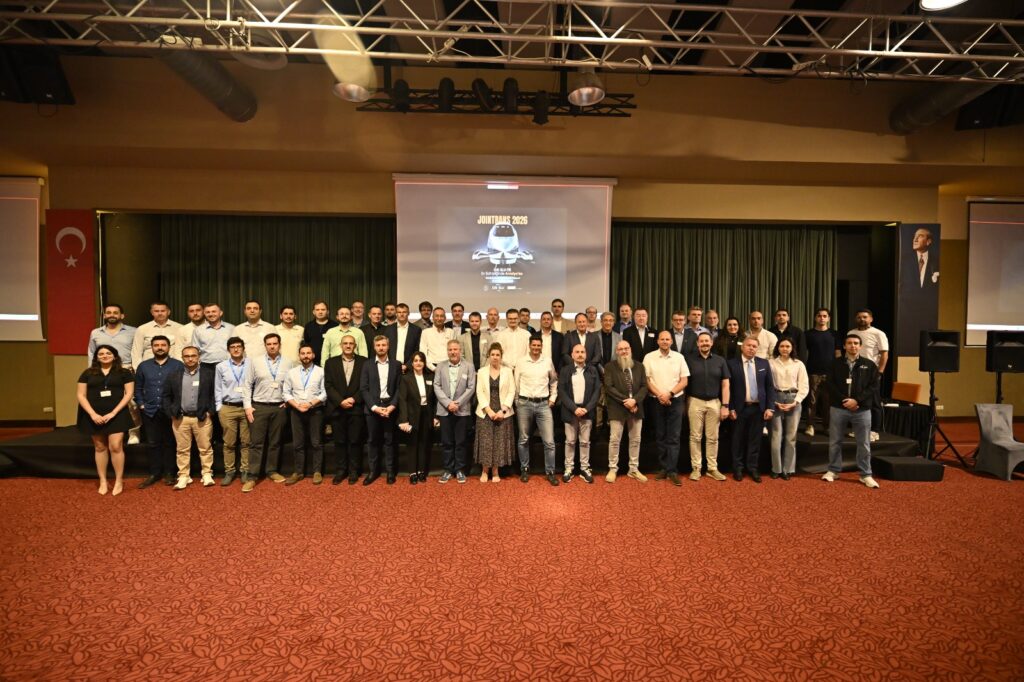
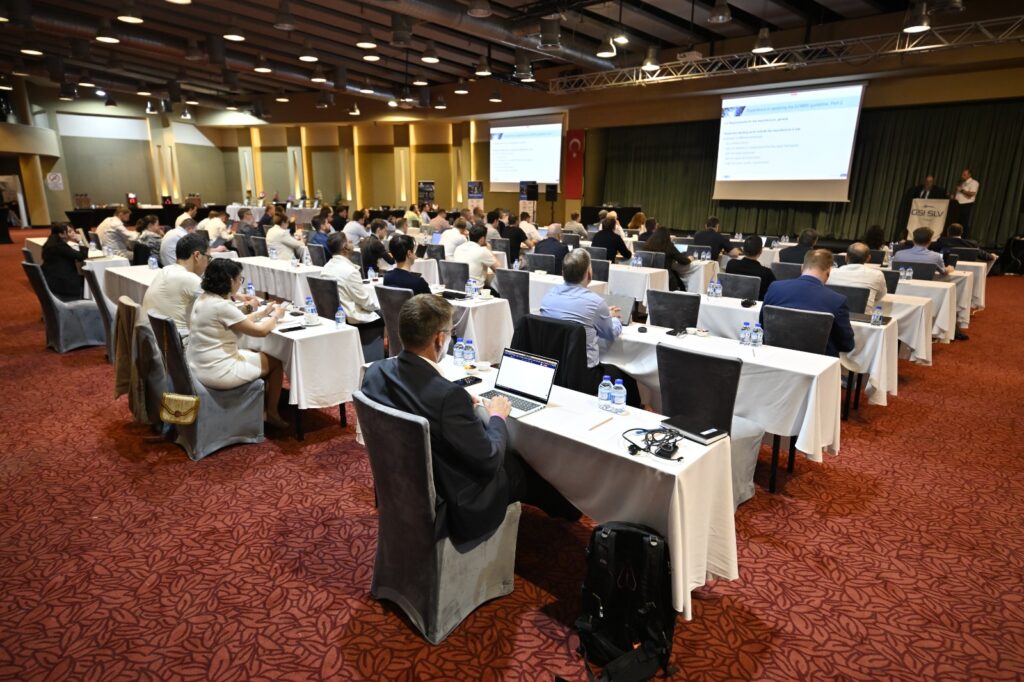
Turkey’s hosting of Jointrans 2026 in Antalya marked an important symbolic milestone: not merely participating in standards, but helping shape them. That brings responsibility as well as prestige. The primary architect of Turkey’s academic and technical advancement in this field is Mr. Özgür Akçam. He has trained an entire generation of specialists who now drive the certification and audit practices surrounding GSI SLV-TR. The silent foundation that allowed Turkey to host Jointrans was built years ago within those exact classrooms.
In my consultations with Mr. Akçam, a critical vulnerability in Turkish tendering became clear: independent auditing collapses at the vital transition phase after the specification is finalized but before production commences. When a tender merely states “Manufacturing shall comply with EN 15085,” the actual scope of deliverables remains undefined. Executing EN 15085 correctly means explicitly listing the Welding Procedure Specification and Qualification (WPS/PQR), welder performance qualifications, weld traceability logs, non-destructive testing (NDT) reports, and the specific manufacturer certification levels (CL1/CL2/CL3/CL4) as distinct, dated, and verifiable deliverables.
The real-world consequences of omission in this chain are predictable. An inadequately approved WPS is subject to constant, ad-hoc reinterpretation on the shop floor; uncertified welders leave traceability ambiguous; and a deficient NDT plan guarantees that internal structural cracks will go unnoticed until the asset hits the maintenance depot—incurring catastrophic rework costs. The public never sees these broken links, but they bear the full safety risk and the compounding financial fallout.
Logically, welding quality must be monitored via a dual-track framework: an officially accredited certification body verifying procedural compliance on one side, and an independent field expert auditing the actual engineering reality on the shop floor on the other. They cannot replace one another.
Most importantly, this framework must never be simulated. A production line with impeccable paperwork but formalized, superficial auditing is vastly more dangerous than an uncertified line; it breeds false security, masking structural deficits that are ultimately exposed only in the maintenance depot, or worse, at a derailment site. This critique is not an indictment of individuals or single entities; it is an appeal for collective professional ethics and higher industrial execution.
Without independent verification, a standard remains dead text on paper. This is precisely why the European rail network utilizes the NoBo, DeBo, and AsBo architecture. NoBos (Notified Bodies) evaluate compliance with Technical Specifications for Interoperability (TSI); DeBos (Designated Bodies) verify national technical rules; and AsBos (Assessment Bodies) manage risk assessment and independent safety evaluations.
A glaring structural flaw in Turkey is the tendency of the purchasing administration to position itself simultaneously as the specifier, the project manager, and the active auditor. This concentration of roles destroys the necessary separation of powers. Auditing must be structurally insulated from project schedule pressures. Timeline constraints can never alter physical engineering realities; they merely defer the accident to a later date.
Total Cost of Ownership (TCO): The Expensive Illusion of Cheap Tenders
Evaluating complex rail procurements purely through the lens of the lowest initial purchase price is a catastrophic financial mistake. The operational lifespan of a train set spans 30 to 35 years. Over this lifecycle, the compounding costs of energy consumption, routine maintenance, spare parts logs, software licenses, updates, specialized depot tools, and operator training will total two to three times the initial capital expenditure—forming the true Total Cost of Ownership (TCO).
A cybersecurity requirement omitted from a specification today returns as an expensive system outage tomorrow. Ambiguity in the spare parts regime today establishes a multi-decade dependency on foreign currency. Unverified weld quality today yields structural failures on active lines tomorrow. Purchasing rolling stock based on raw “speed metrics” rather than compatibility with the actual geometry and operational realities of the target line guarantees inflated energy and maintenance invoices for the public. Public capital is not protected on the day of the tender opening; it is protected by ensuring the integrity of the asset across its entire operational life.
Turkey possesses the institutional capability to break this cycle of dependency. ASELSAN’s signaling and train control architectures, TÜBİTAK RUTE’s traction, interlocking, and National Signaling developments, TÜRASAŞ’s manufacturing capacities, and the deep field knowledge within industry bodies like RAYDER, TÜRSİD, DTD, RSC, and BURAY cannot be sidelined. National signaling execution, ERTMS alignment, and domestic technological capability are matters of strategic sovereignty, not merely industrial policy.
Crucially, “domestic production” must never serve as an excuse for substandard execution. To empower domestic industry for global competition, local standards must be made significantly more stringent. The path to protecting domestic industry involves elevating the standards and supporting local firms to meet them, rather than diluting specifications to accommodate structural weaknesses.
Cybersecurity Is No Longer an Optional Clause
Modern rail infrastructure is no longer defined solely by steel, concrete, high voltage, and rolling stock. Signaling networks, traffic management, switch controls, train control software, maintenance telemetry, remote monitoring, passenger information systems, energy optimization, human factors, and depot logistics are now completely interconnected digital ecosystems. This hyper-connectivity optimizes efficiency, but it introduces massive systemic vulnerability.
Industrial control system standards like IEC 62443 and rail-specific cybersecurity frameworks like CLC/TS 50701 are not optional luxuries. A cyber incident on a railway network yields consequences far more severe than localized data loss; it manifests as corrupted signaling, erroneous commands, maintenance overrides, false alarms, total operational paralysis, and extreme physical safety failures.
The disruptive sabotage and arson attacks targeting high-speed rail networks in France during the Paris Olympics, alongside the continuous malicious attempts directed at the Marmaray network, prove that threats to rail infrastructure—whether physical or digital—are active, asymmetric, and real.
Writing “Cybersecurity shall be provided” into a specification is functionally useless. A publication-grade specification must explicitly mandate comprehensive threat modeling, a verified security case file, strict identity and access management (IAM), mandatory patch management protocols, defined supplier liabilities, incident response playbooks, system update rights, and holistic security lifecycle management.
Any unallocated responsibility becomes a dangerous grey zone during a crisis. For instance, asserting that a system is secure while third-party maintenance teams retain unmonitored administrative access is a contradiction; the precise governance of that access must be dictated within the specification.
The Question of Equal Citizenship
We must confront the most fundamental question: If the rolling stock built by a global manufacturer for a European Union nation explicitly dictates stringent protocols for welded manufacturing, bolted connections, software lifecycle, cybersecurity, human factors, and independent safety assessments—are those same protocols demanded, with identical clarity, recency, and enforcement, when vehicles are sold to Turkey?
If the answer is no, what is the justification for this disparity? Is it cost? Let us be completely transparent: Is human life an adjustable line item in a budget?
The citizens of the Republic of Turkey are not inferior to those of any other nation. This statement is not a rhetorical slogan; it is the ultimate ethical and professional metric that must be placed before every technical team drafting a specification and every administrative authority signing off on a public tender.
The historical precedents of Bombardier and Talgo demonstrate that global players aggressively defend their strategic assets. Sovereign nations protect their own industries, technologies, human capital, and standard frameworks. Turkey must manifest this exact protective reflex—not merely through corporate acquisitions, but within the structural quality of its procurement specifications. Strategic independence is not merely owning the factory floor; it is owning the engineering logic.
The Way Forward
Final Verdict
Command of the engineering logic does not begin on the active track; it begins on the drafting paper of the specification.
If the specification is weak, the system remains fragile—no matter how impressive the train appears. If standards are omitted, safety is compromised and life-cycle costs skyrocket. Without independent audits, trust is an illusion. Devoid of human factors engineering, automation is a liability. Lacking cybersecurity, the digital railway is indefensible. Without a rigorous TCO framework, a seemingly cheap procurement exposes the nation to deep, multi-decade technological subjugation.
The citizens of the Republic of Turkey are not inferior to those of any other nation—and that principle must be reflected in every binding technical specification. This sentence does not belong on an office wall; it belongs in the binding text of every procurement specification. The state—the institutional manifestation of the public will—cannot copy its promise of safety to its citizens from outdated templates.
Sincerely,
Yiğit Belin yigit@yigitbelin.com | yigitbelin.com & Partners Founder of
“The author consulted Dr. Eylem Thron on general human factors topics; the interpretation, examples, and any application to Turkish procurement are the author’s alone and do not represent Dr Thron’s views.”
great publish, very informative. I ponder why the opposite specialists of this sector do not realize this. You must proceed your writing. I am confident, you’ve a great readers’ base already!